Hann-Ocean Presents Drakoo® Sea-Trial Results at World Conference on Floating Solutions 2026
04/11/2026
Singapore, 23 October 2026 — Hann-Ocean Technology Pte Ltd presented the development and China sea-trial results of its Drakoo® wave energy converter at the 6th World Conference on Floating Solutions (WCFS 2026), held at Singapore EXPO from 19–21 October 2026.
Henry Han, Managing Director of Hann-Ocean, delivered the presentation during the conference’s Marine Renewable Energy Symposium, sharing the company’s experience in moving wave energy technology from controlled testing towards prolonged operation in real marine environments.
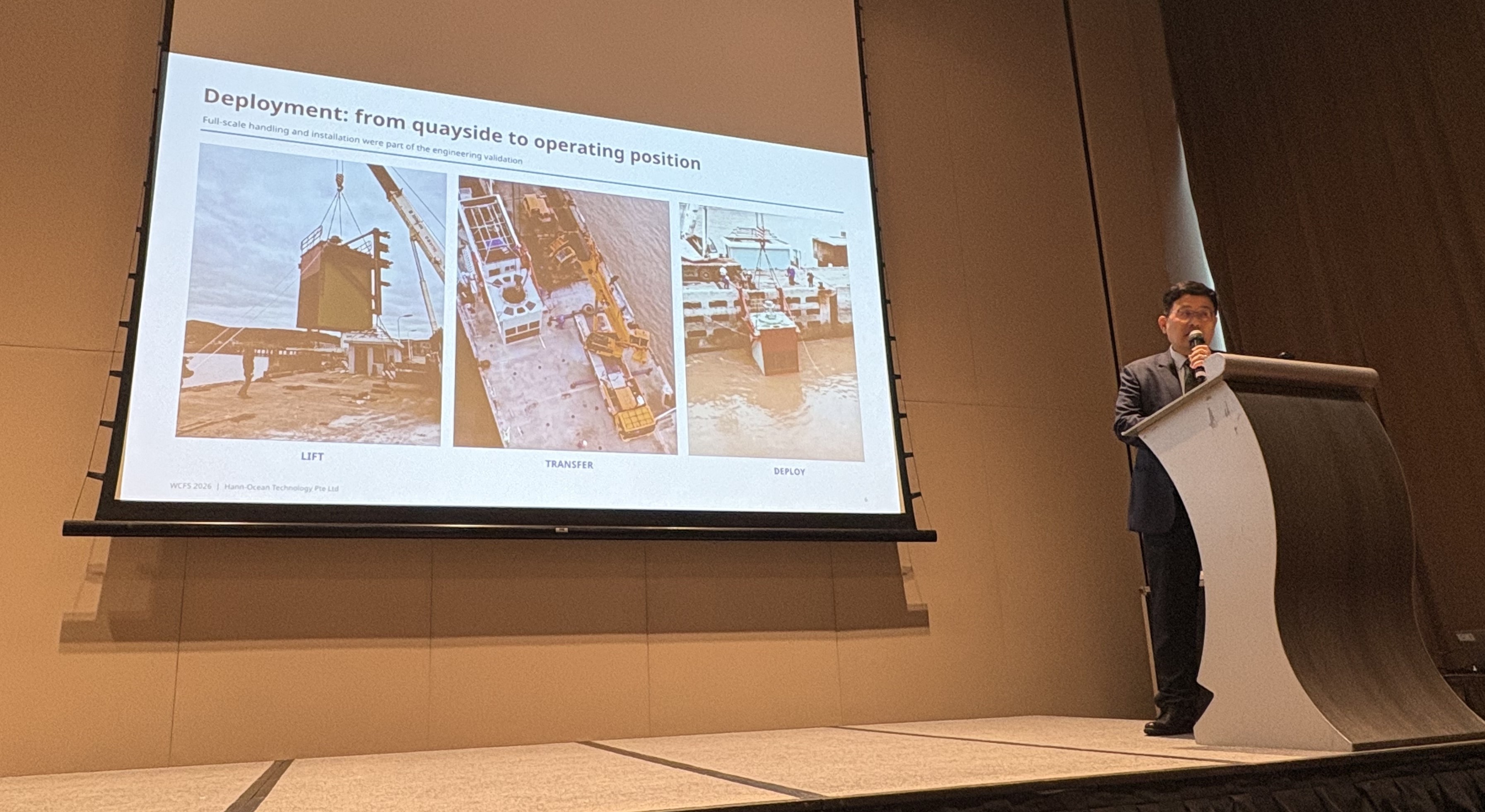
Henry Han presenting Drakoo® sea-trial and engineering validation results at WCFS 2026.
From controlled testing to real sea experience
Developed by Hann-Ocean since 2008, Drakoo uses a patented twin-chamber system to convert oscillating wave motion into water flow through a hydro turbine in a single direction. Its modular configuration is intended to support integration with jetties, breakwaters and floating platforms, allowing renewable electricity to be generated close to where it is required.
At WCFS 2026, Mr Han presented findings from the third-generation 15 kW Drakoo prototype, which completed approximately two years of in-water testing in China within a programme lasting around two and a half years, including retrieval, inspection and technical upgrades.
The programme exposed the device to real marine conditions including sediment-laden seawater, marine growth, component wear, changing tides and severe weather. During the sea trial, the prototype survived a typhoon in which a wave height of 6.7 metres was recorded at the trial site.
A recorded operating result also showed mean electrical output of approximately 8.69 kW under reported wave conditions of 1.1 metres in height and a 7.2-second period. Earlier controlled wave-tank testing, conducted with DNV verification involvement, had reported average wave-to-electricity conversion efficiency of 29.6%. The extended sea programme complemented this work by examining durability, reliability and structural performance under prolonged marine exposure.
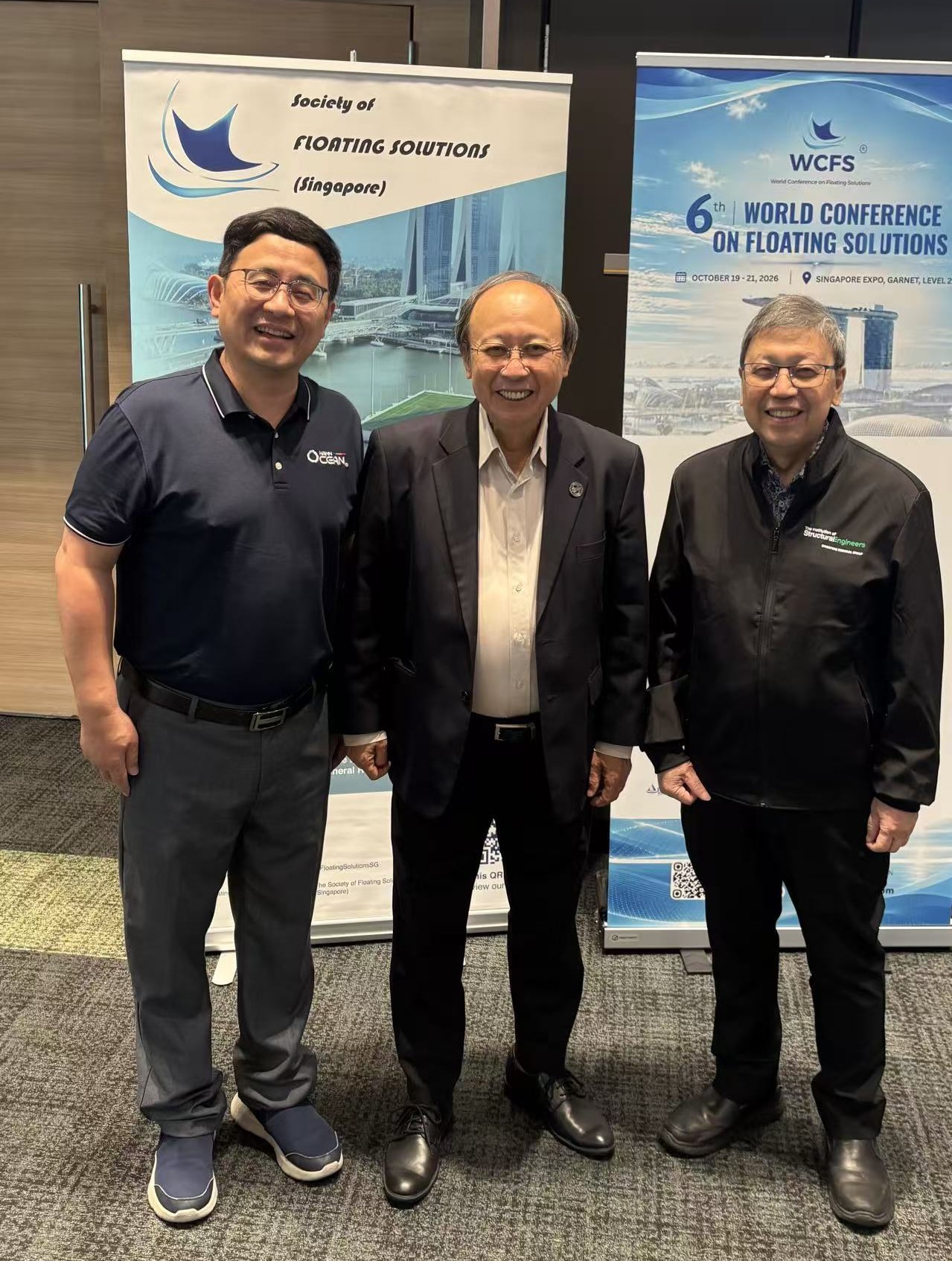
Henry Han with industry participants at the 6th World Conference on Floating Solutions (WCFS 2026) in Singapore.
Engineering for practical deployment
The sea trial also identified engineering challenges that need to be addressed as wave energy technology progresses towards commercial applications. Bearing wear caused by sandy seawater and the effects of marine growth were among the issues observed during long-term operation. These findings have informed subsequent improvements to materials, components and maintenance arrangements.
For offshore energy systems, reducing maintenance requirements is particularly important because vessel access, lifting operations and weather restrictions can significantly increase operating costs. Based on the sea-trial findings and subsequent upgrades, Hann-Ocean is targeting a two-year interval between major maintenance activities.
The results are also providing an engineering basis for the fourth-generation Drakoo. Hann-Ocean is developing a more compact 15 kW configuration with a target weight of approximately five tonnes, compared with the 17-tonne sea-trial prototype. The reduction in weight is expected to facilitate installation and integration with floating structures while reducing demands on supporting infrastructure.
Integrating renewable energy with floating infrastructure
As more industrial, research and aquaculture activities move onto the water, access to reliable electricity will become increasingly important. Hann-Ocean’s development vision is to integrate wave energy into floating infrastructure from the outset.
Combined with suitable wind or solar generation, battery storage and energy management, wave energy could contribute to offshore power systems serving lighting, communications, pumping, water treatment and other operational requirements. The appropriate combination would depend on local resources and the facility’s electricity demand.
During WCFS 2026, Mr Han also outlined a proposed X-shaped floating array comprising 40 Drakoo modules rated at 50 kW each, providing a total installed capacity of 2 MW. The concept explores the potential deployment of wave energy systems within offshore wind farm areas, subject to site conditions, engineering compatibility and marine spatial planning.
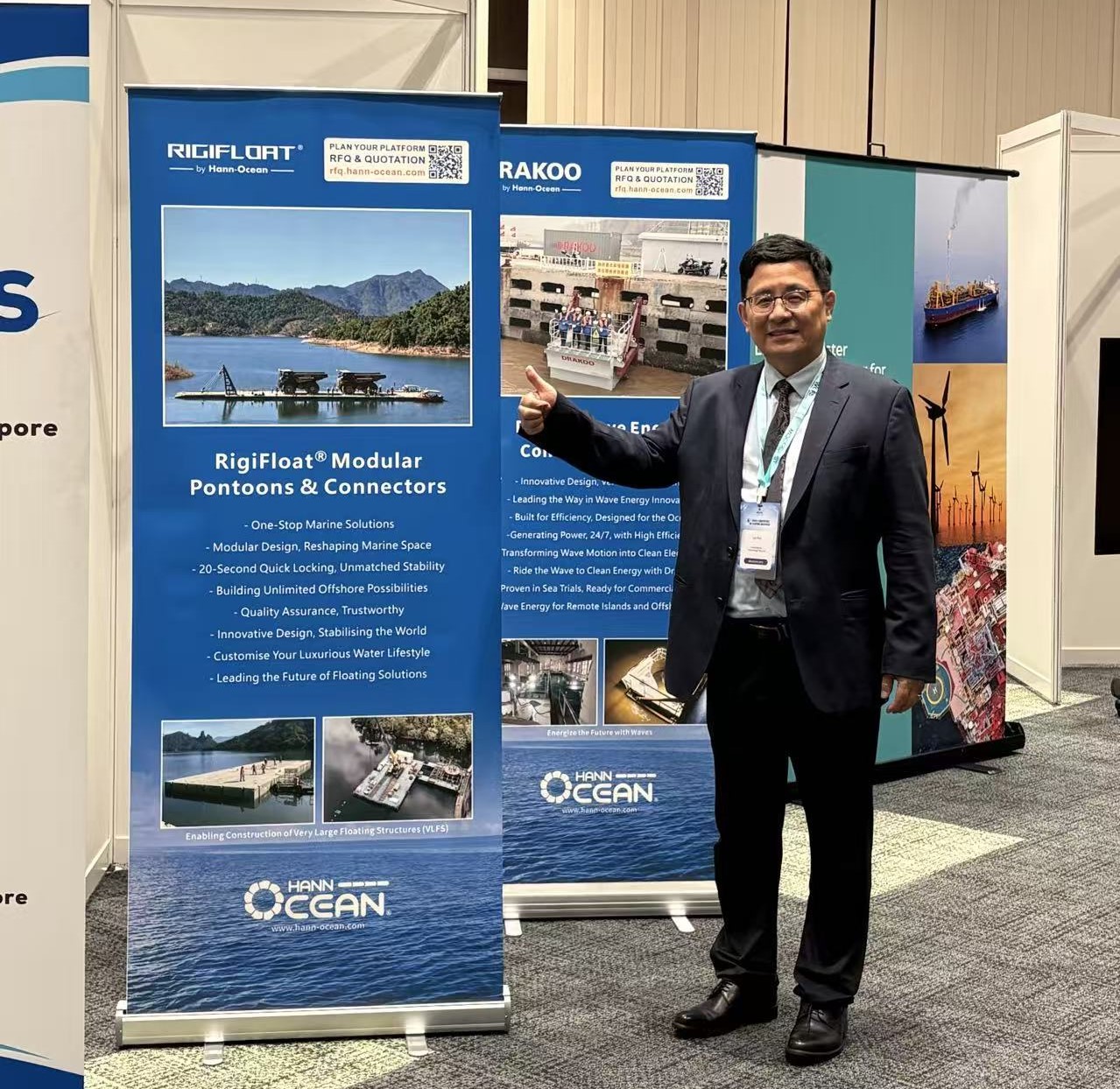
Henry Han with Hann-Ocean’s RigiFloat® modular floating system and Drakoo® wave energy technology displays at WCFS 2026.
By connecting renewable generation with the structures and activities it serves, Hann-Ocean aims to support more energy self-sufficient floating infrastructure and the responsible development of ocean space.
About Hann-Ocean Technology
Hann-Ocean Technology Pte Ltd is a Singapore-based engineering company developing marine technologies, including RigiFloat® modular floating systems and Drakoo® wave energy converters.
Website: www.hann-ocean.com

